
Ground-Up Soundproof Studio Shed
A backyard music studio built from the slab up, with a decoupled, mass-loaded shell that keeps the music inside.
Before & after
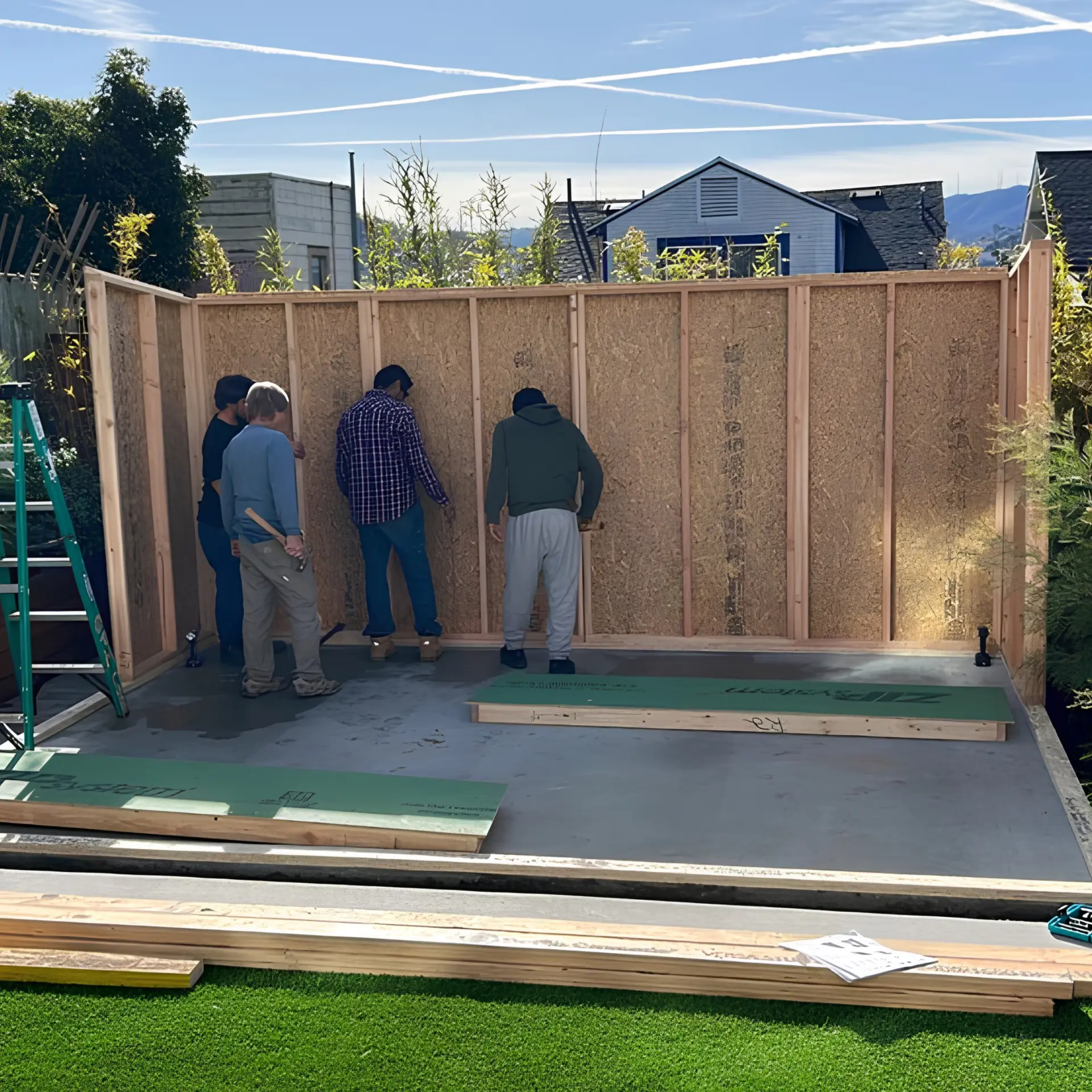
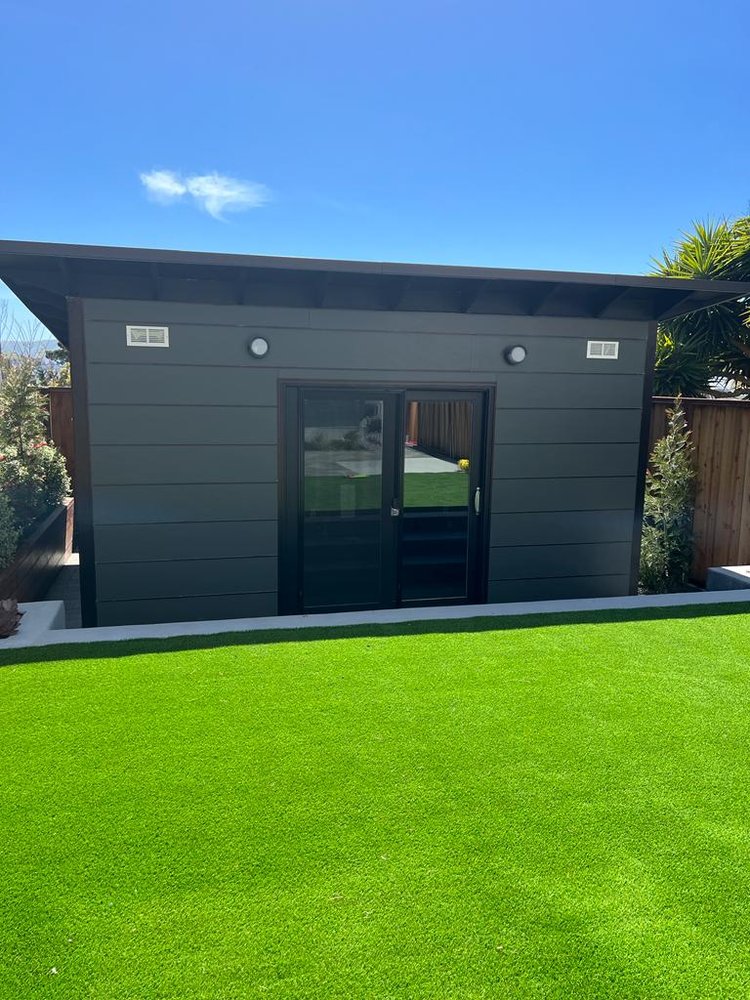
Project photos
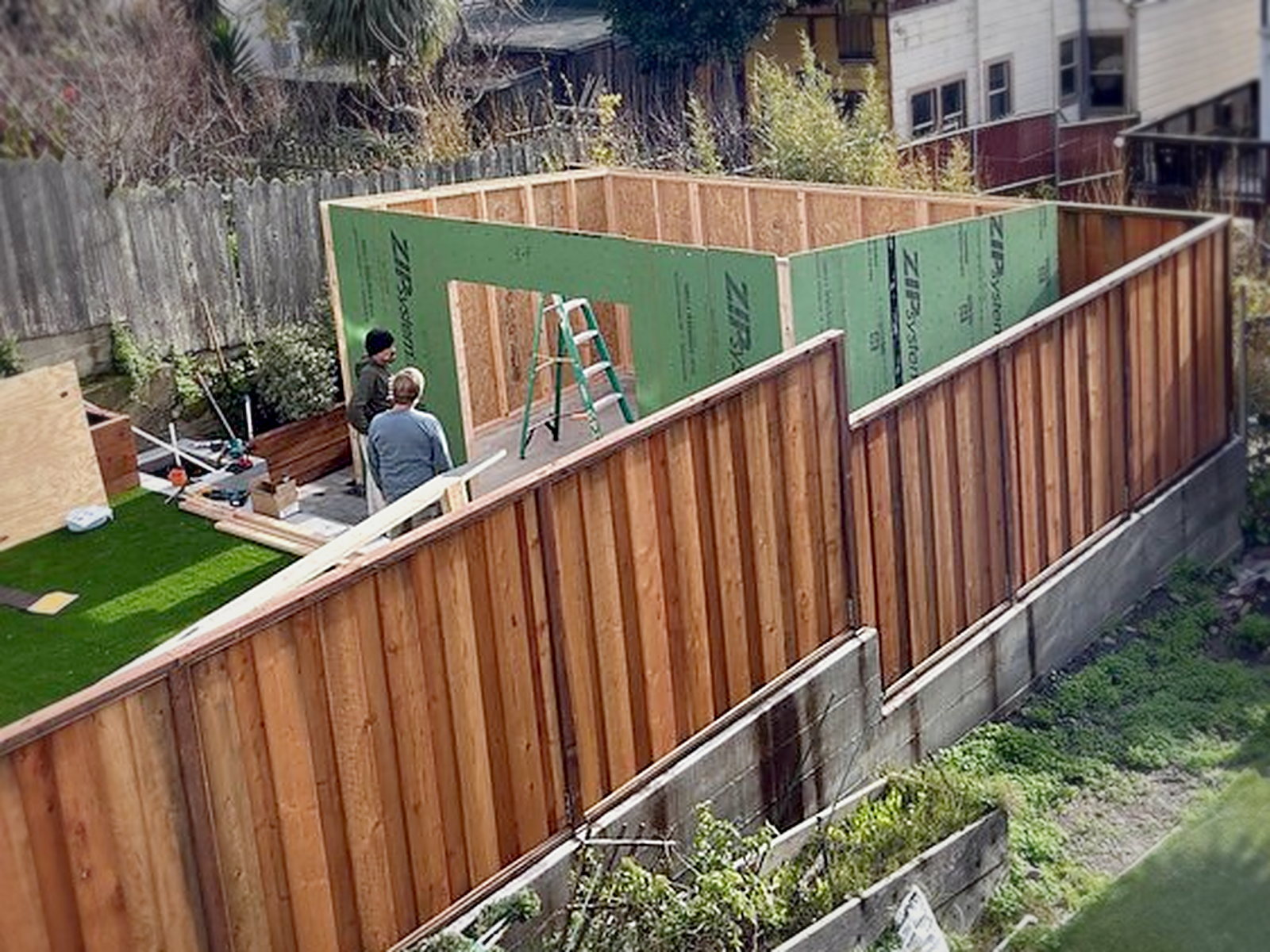
Framing day: the shell goes up on the cured slab, sheathed in ZIP System panels. 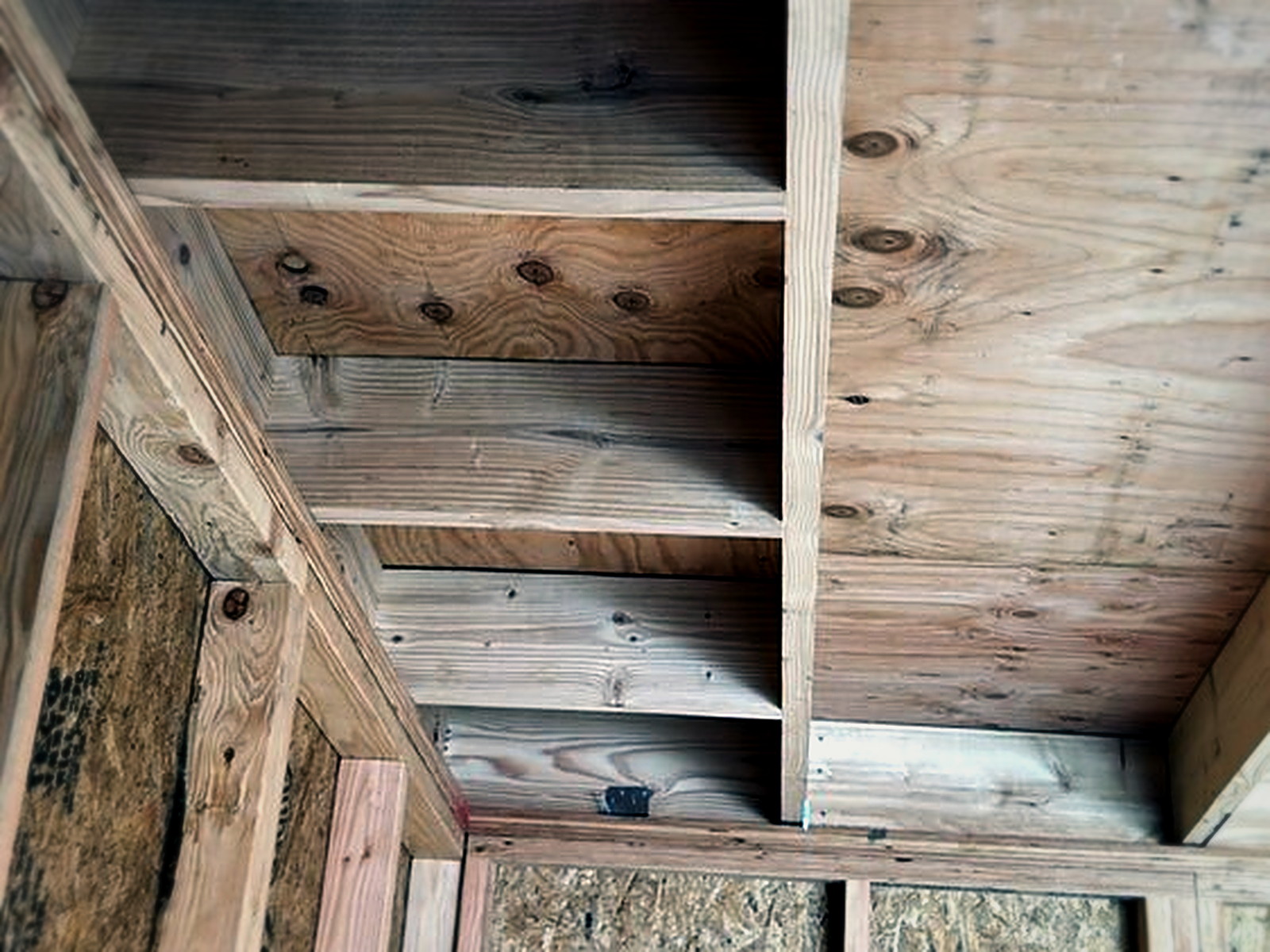
Roof rafters and ceiling deck tied into the sheathed walls. 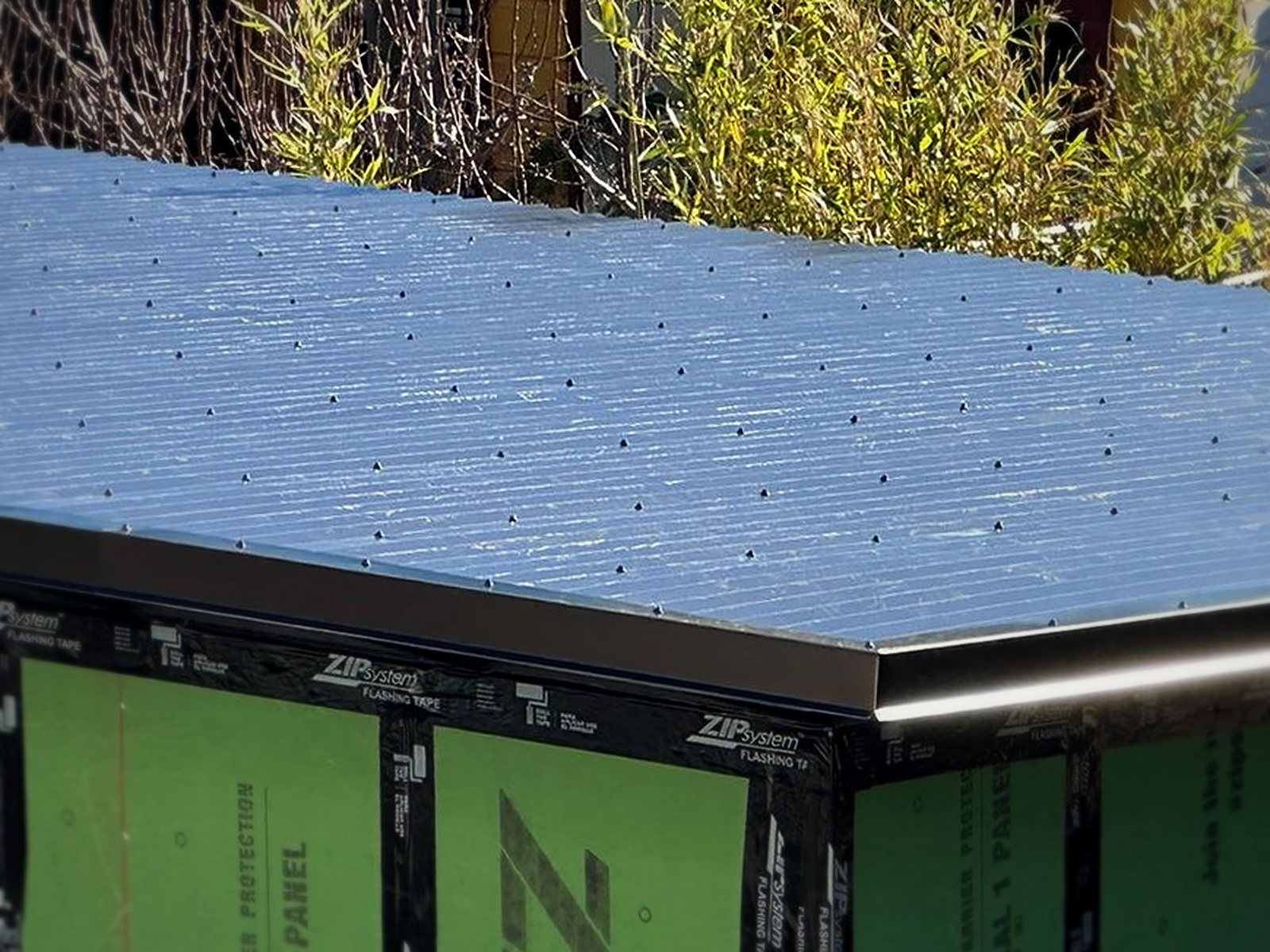
The roof deck buttoned up and fastened before the soundproofing layers start. 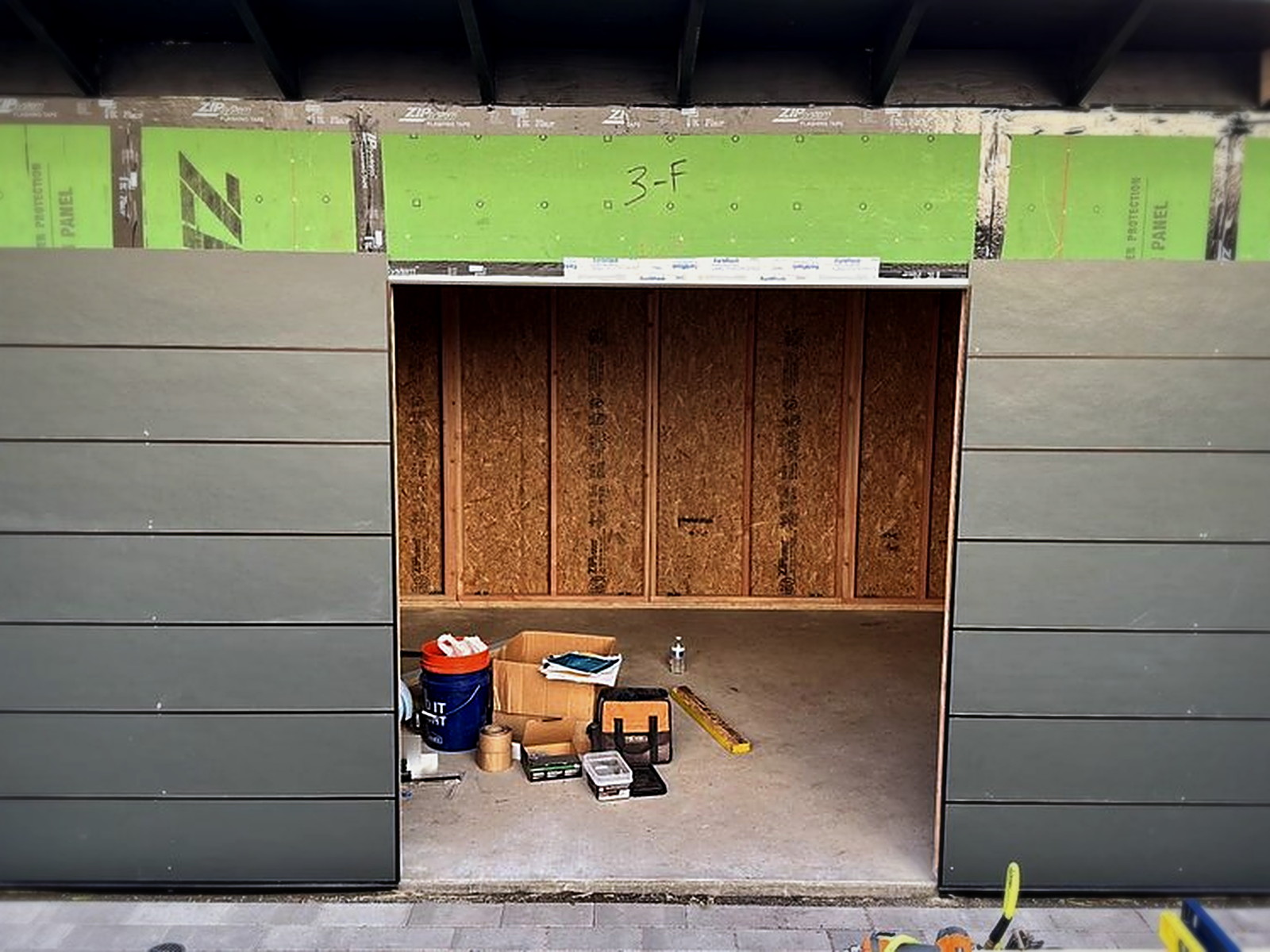
Exterior cladding going on over the sealed sheathing. 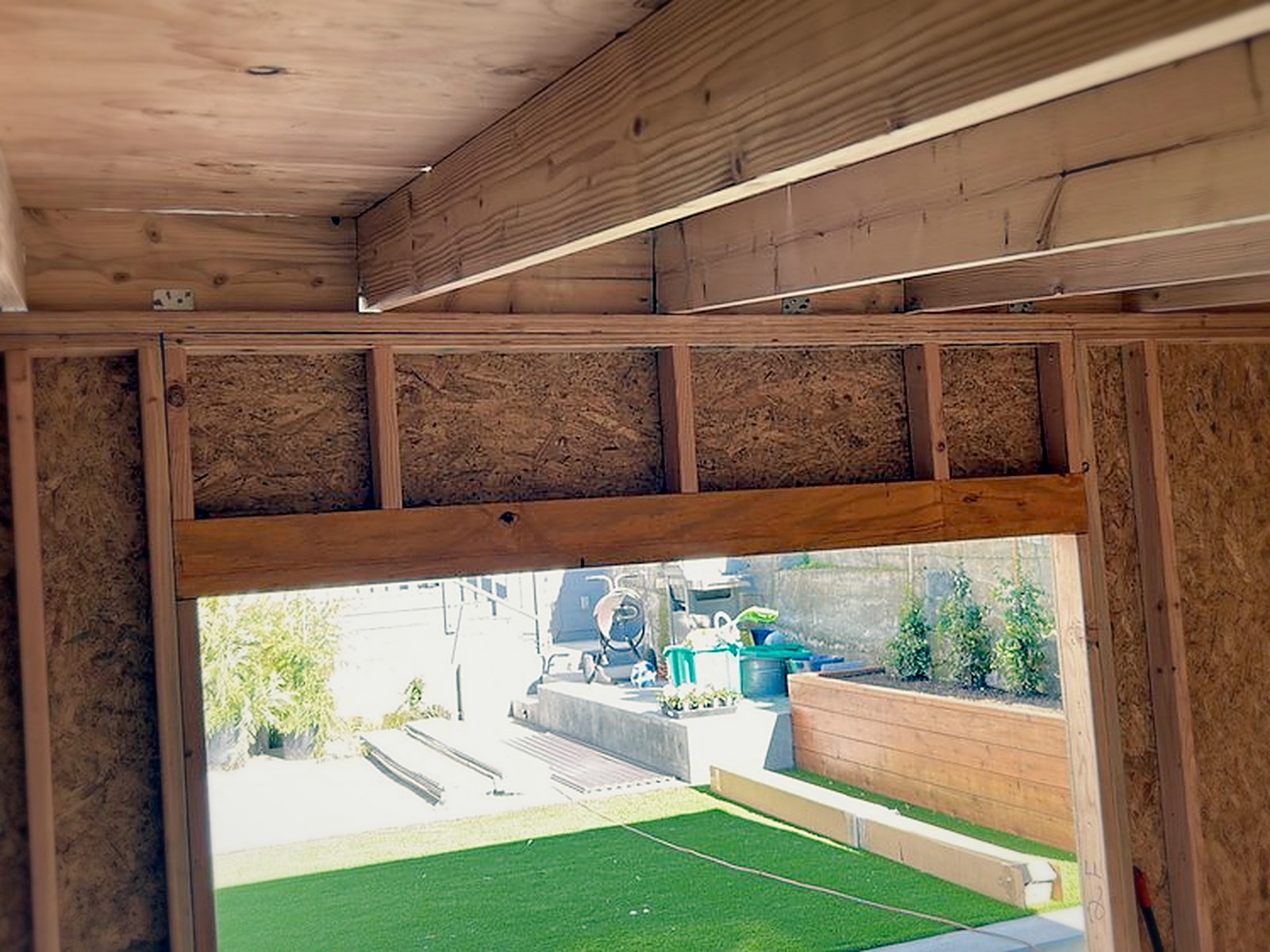
The door opening framed and squared, still open to the yard. 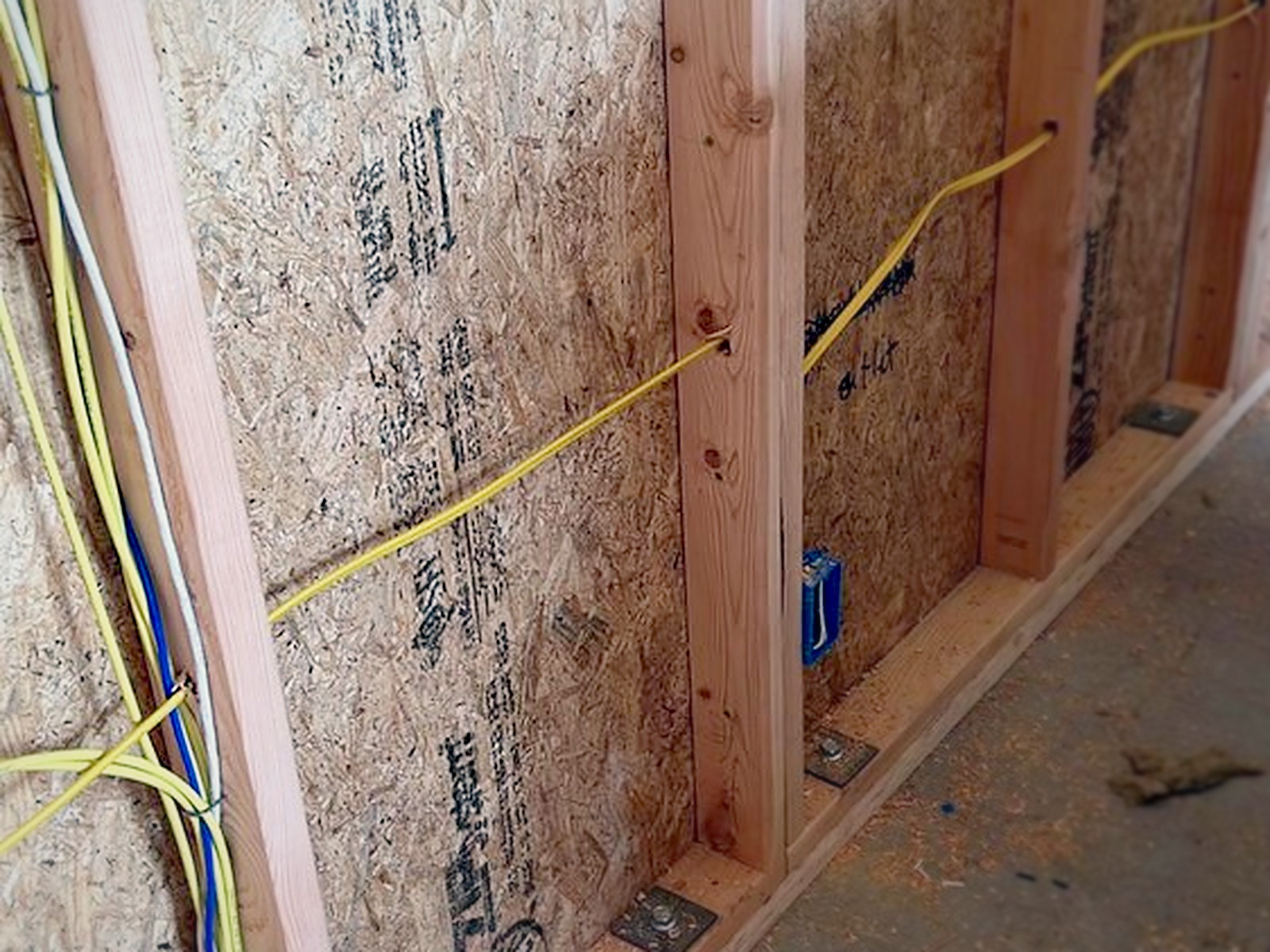
Electrical rough-in staged before insulation so every box can be putty-padded. 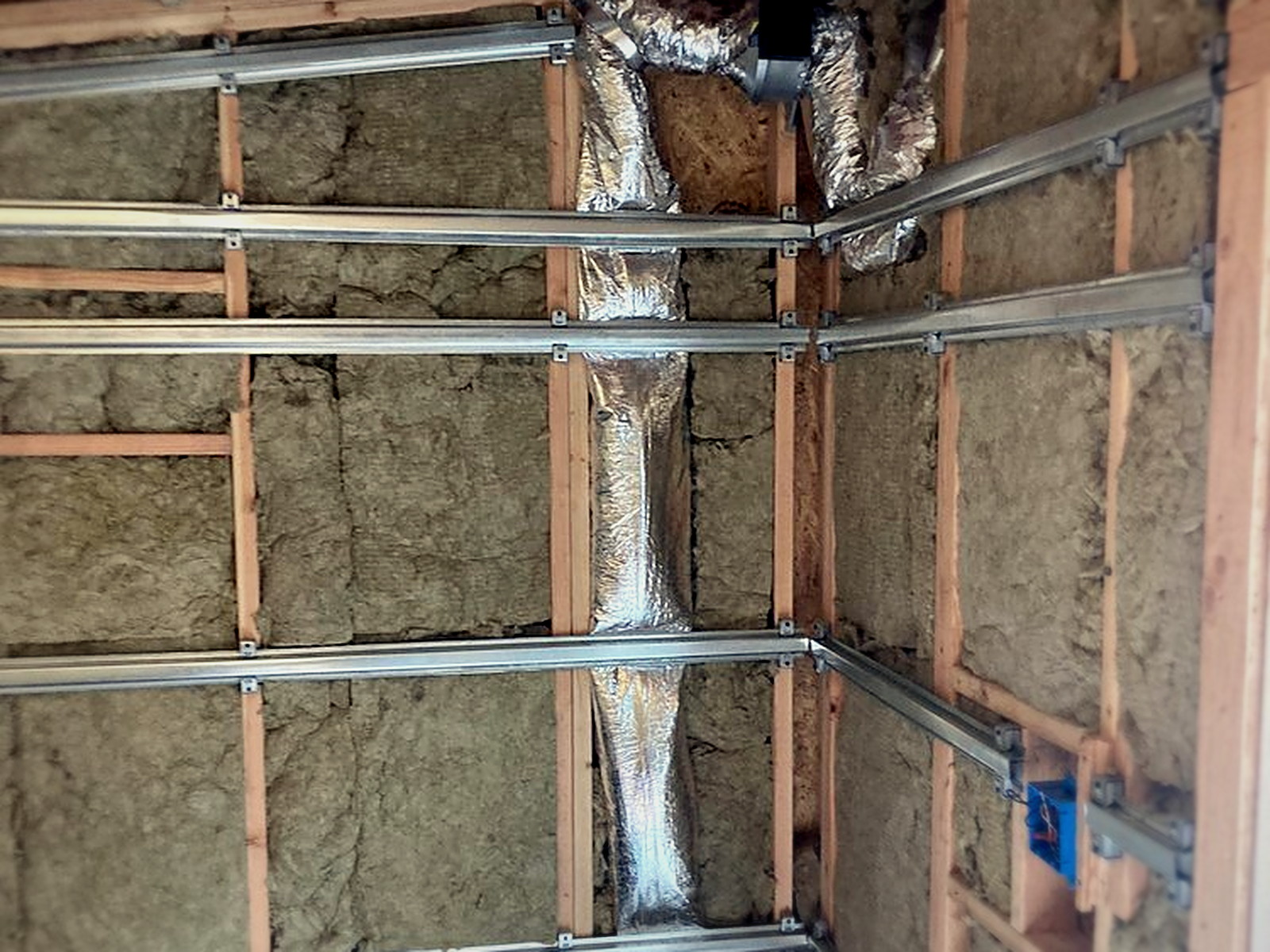
Rockwool cavities, then clips and hat channel decoupling the walls and ceiling. 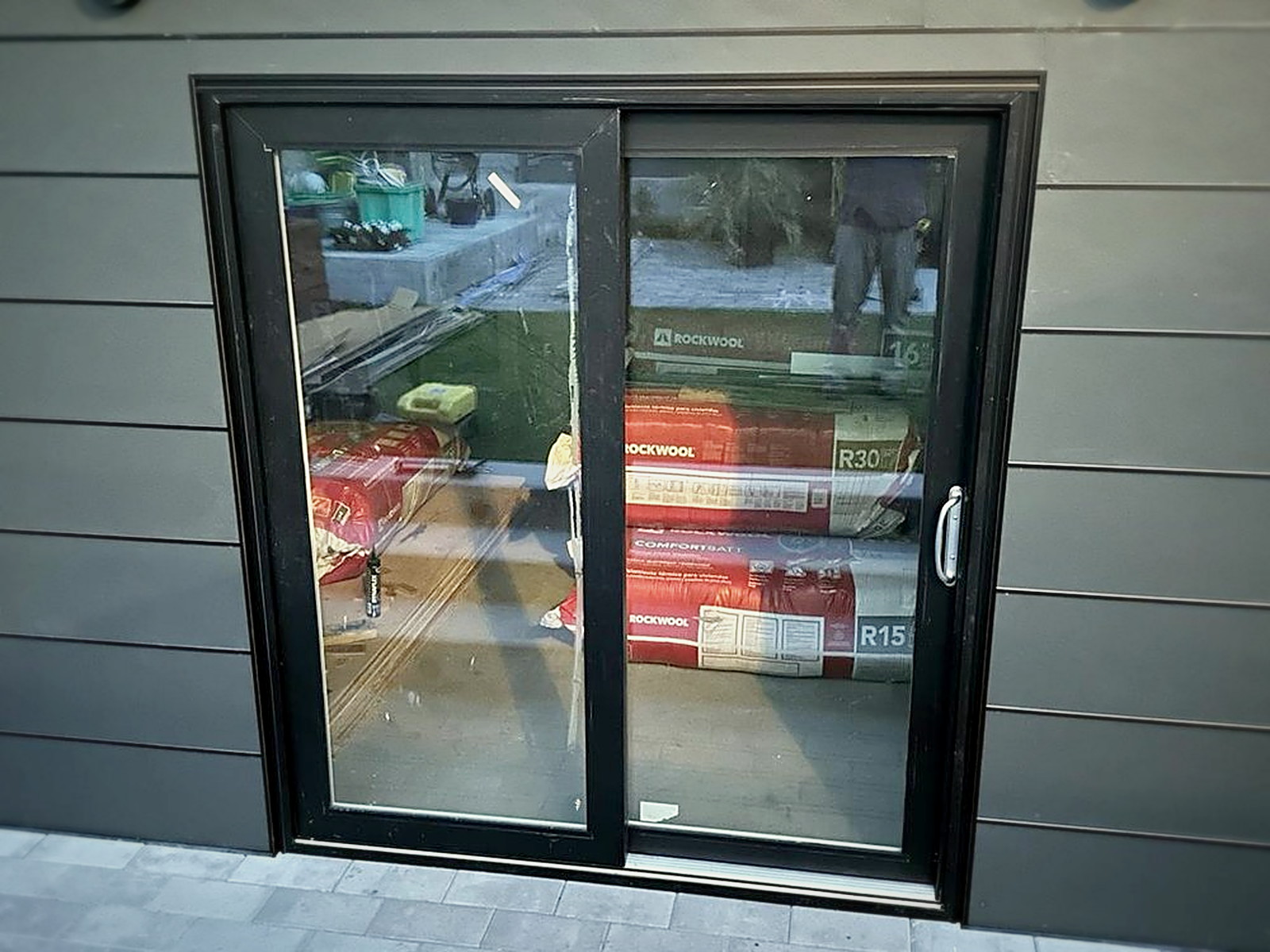
The sliding glass door set into the finished siding, insulation staged inside. 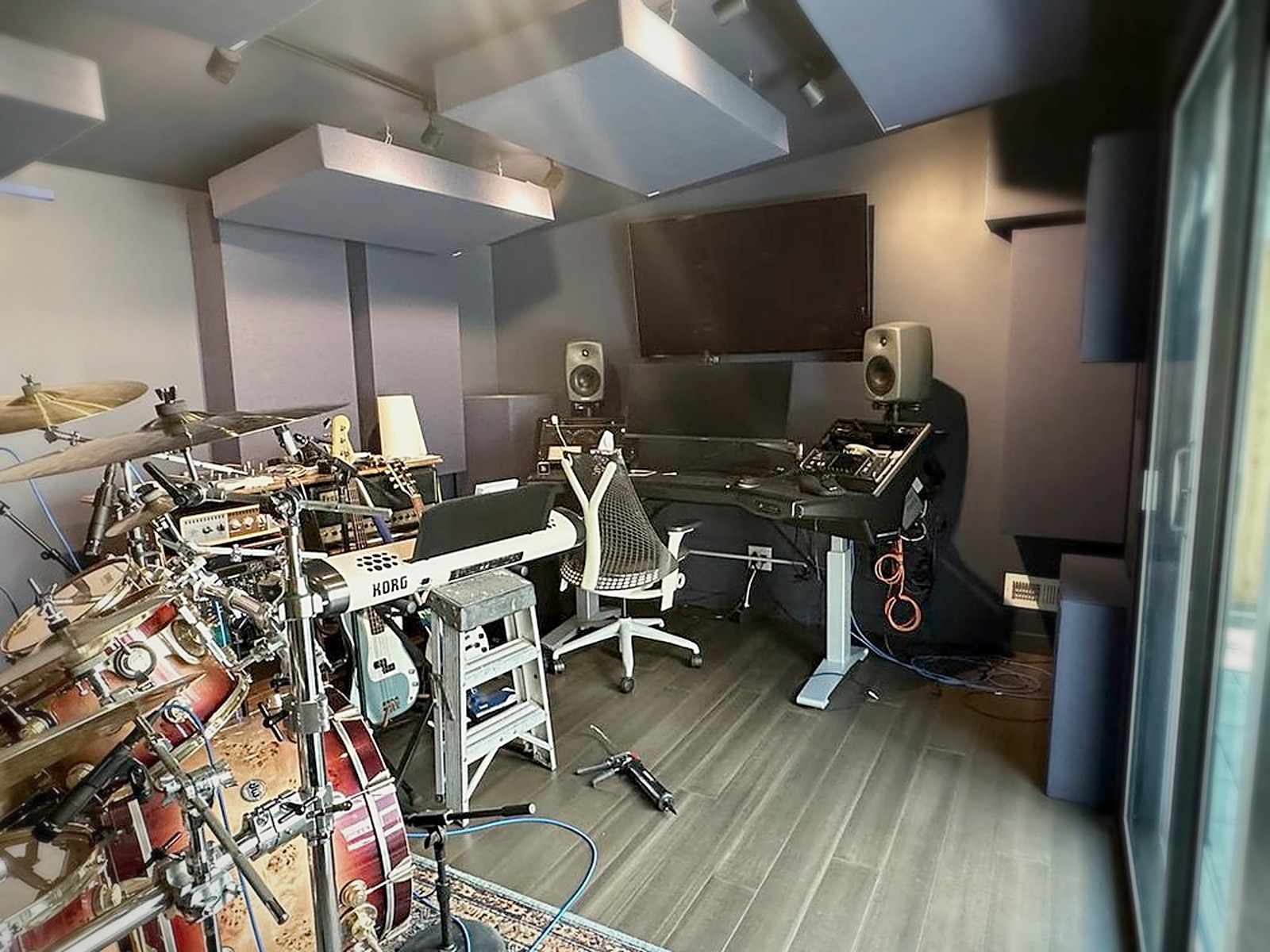
The finished room: ceiling clouds, wall absorption, desk and kit in place. 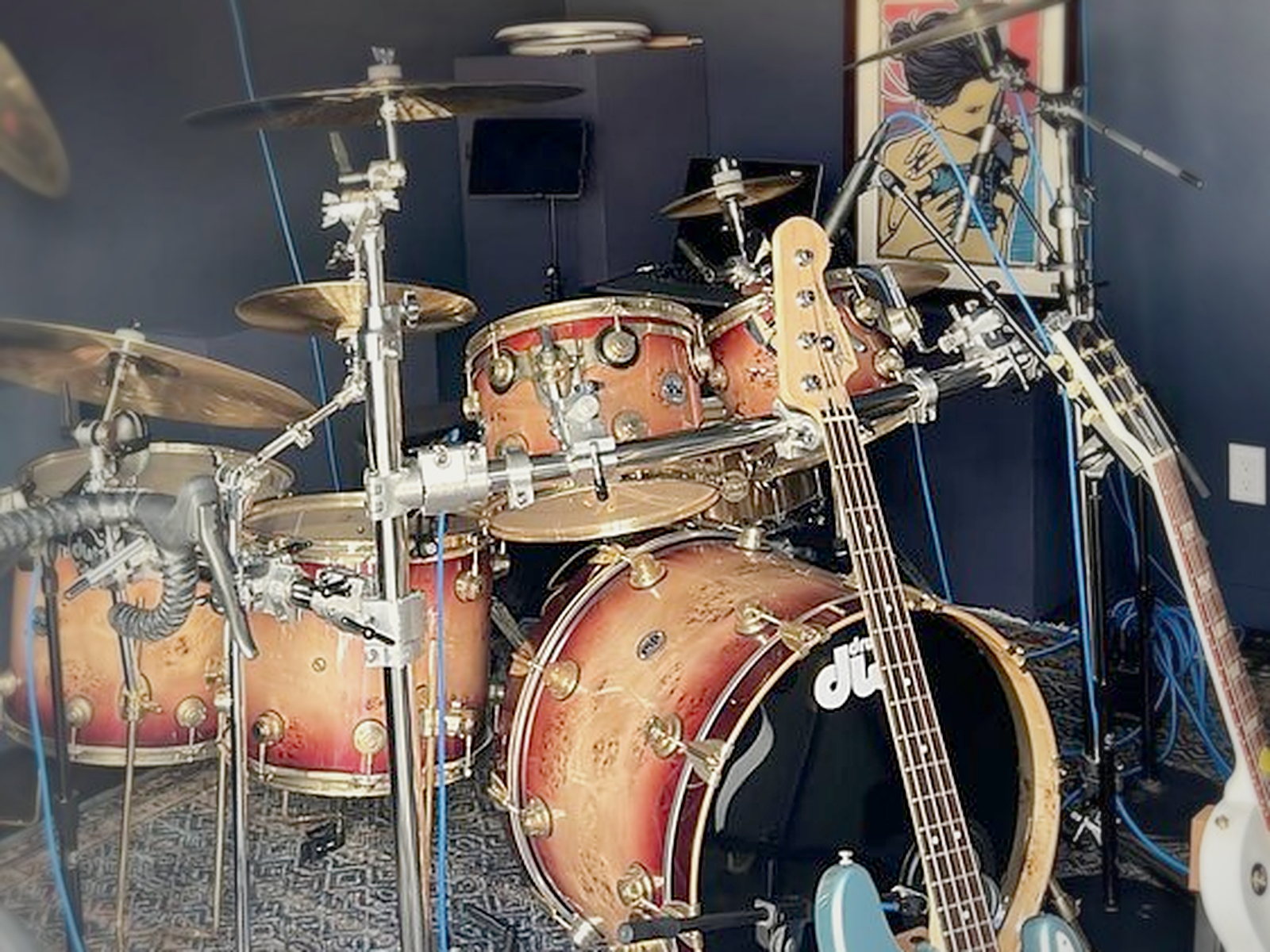
Tracking corner under the clouds, mic'd up and ready to play at full volume.
Build timeline
- 1
Foundation & slab
The cement foundation was poured and cured, giving the new structure a solid, isolated base before any framing began.
- 2
Framing & rough-in
Wall and roof framing went up on the pad, with electrical, lighting, and low-voltage pathways roughed in before the soundproofing layers were installed.
- 3
Insulation & decoupling
Every wall and ceiling cavity was filled with Safe'n'Sound mineral wool insulation, then sound isolation clips and hat channel were added to decouple the finish surfaces from the framing.
- 4
Mass & damping
Mass loaded vinyl was hung for added mass, followed by a layered plywood and drywall skin with Green Glue between the layers to dissipate sound energy.
- 5
Sealing & penetrations
Putty pads sealed every electrical box and fixture penetration; acoustic sealant was run around the full perimeter of the assembly to close the airtight envelope.
- 6
Finishes & systems
Engineered wood flooring, sliding doors, ventilation, and final trim were installed, completing the studio without opening new sound paths through the shell.
Materials & system summary
The key soundproofing components used on this build, grouped by the job each layer does in the assembly.
Cavity absorption
Packed into every wall and ceiling cavity to absorb energy inside the framing and damp cavity resonance.
Decoupling
Break the mechanical connection between the framing and the finish surface so vibration can't ride straight through the studs.
Carries the drywall on the clips, holding the finished skin off the framing.
Mass
A limp, heavy barrier layer added over the framing to raise the transmission loss of the shell.
- Plywood + drywall skin
Layered rigid sheeting supplies the structural mass the damping compound works against.
Damping
Applied between the plywood and drywall layers to convert sound energy into trace heat instead of passing it along.
Sealing
Wrapped around every electrical box and fixture penetration to close the leaks that undo a mass layer.
Run around the full perimeter of the assembly to make the envelope airtight, and therefore soundtight.
What was the sound concern?
The client wanted a dedicated music studio in their backyard without the practice and recording sessions carrying out to neighbors or back into the house. Because the structure was being built from scratch, the sound had to be contained within the walls themselves rather than treated after the fact.
What was our plan?
We built the studio from the ground up. After the cement foundation was poured we framed the structure, then treated every wall and ceiling cavity with Safe'n'Sound mineral wool insulation. Over that went sound isolation clips and hat channel to decouple the finish surface from the framing, mass loaded vinyl for added mass, and a layered plywood and drywall skin with Green Glue between the layers to dissipate sound energy.
What further issues did we need to resolve?
Mass and decoupling only work if the shell is airtight, so the small penetrations got the most attention. Putty pads were installed around every fixture and outlet to close off leaks at the electrical boxes, and acoustic sealant was run around the full perimeter of the assembly. Sliding doors, the electrical rough-in, and an air system all had to be added without opening a new sound path through the envelope.
What was our final Sound Solution?
The finished shed is a fully decoupled, sealed structure: Safe'n'Sound cavities, clips and channel, mass loaded vinyl, and plywood plus drywall damped with Green Glue, all sealed at the perimeter. With sliding doors, electrical, an engineered wood floor, and ventilation in place, the client has a comfortable studio they can play in at full volume without disturbing the neighborhood.
Want a room like this?
Tell us the size of your space, where it is, and whether you're trying to block sound or clean up the sound inside it. We'll come back with a scoped estimate — usually within one business day.
Prefer to talk it through? Call (415) 864-4440.