
Conference Room Echo Control with Custom Fabric Track Panels
Thirteen custom fabric track panels sized to the room's existing wall banners — reverb pulled down, speech restored, and the hangings rehung over the panels.
Before & after
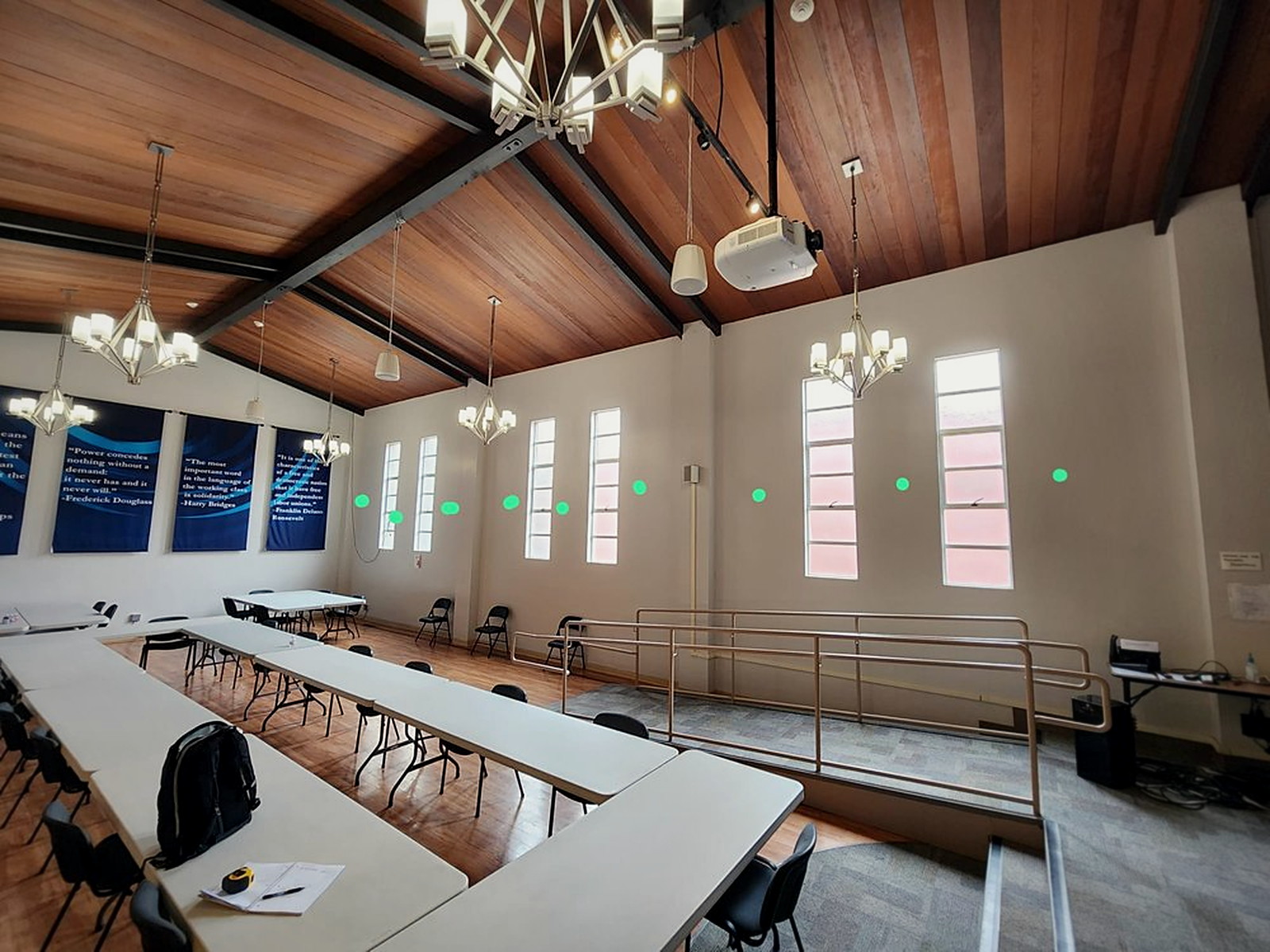

Project photos
Layout walk-through with panel positions marked on the wall. 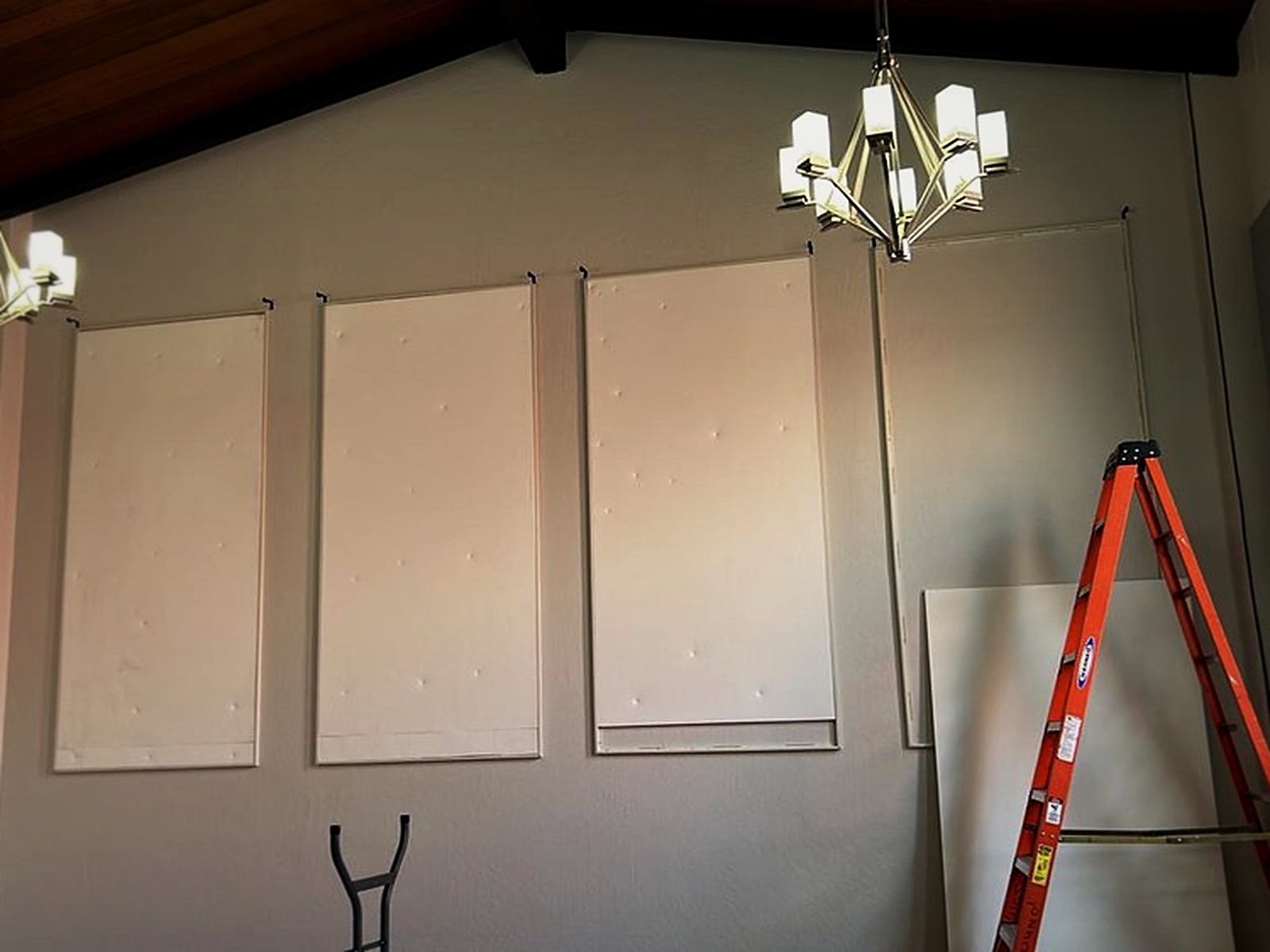
Tracks up and polyboard set inside, sized to match the banners that come back over them. 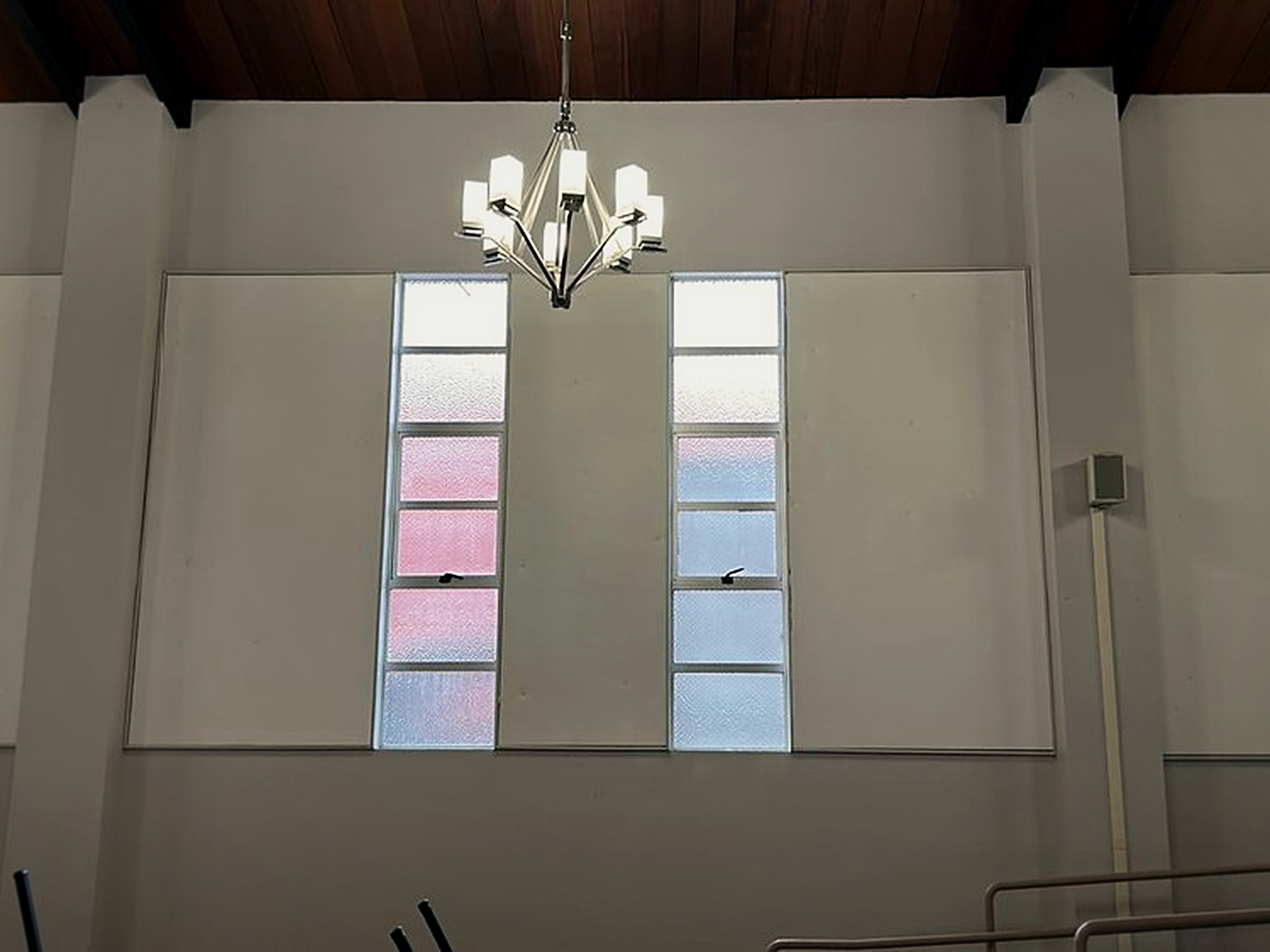
Panels shaped around the window bays so the daylight is untouched. 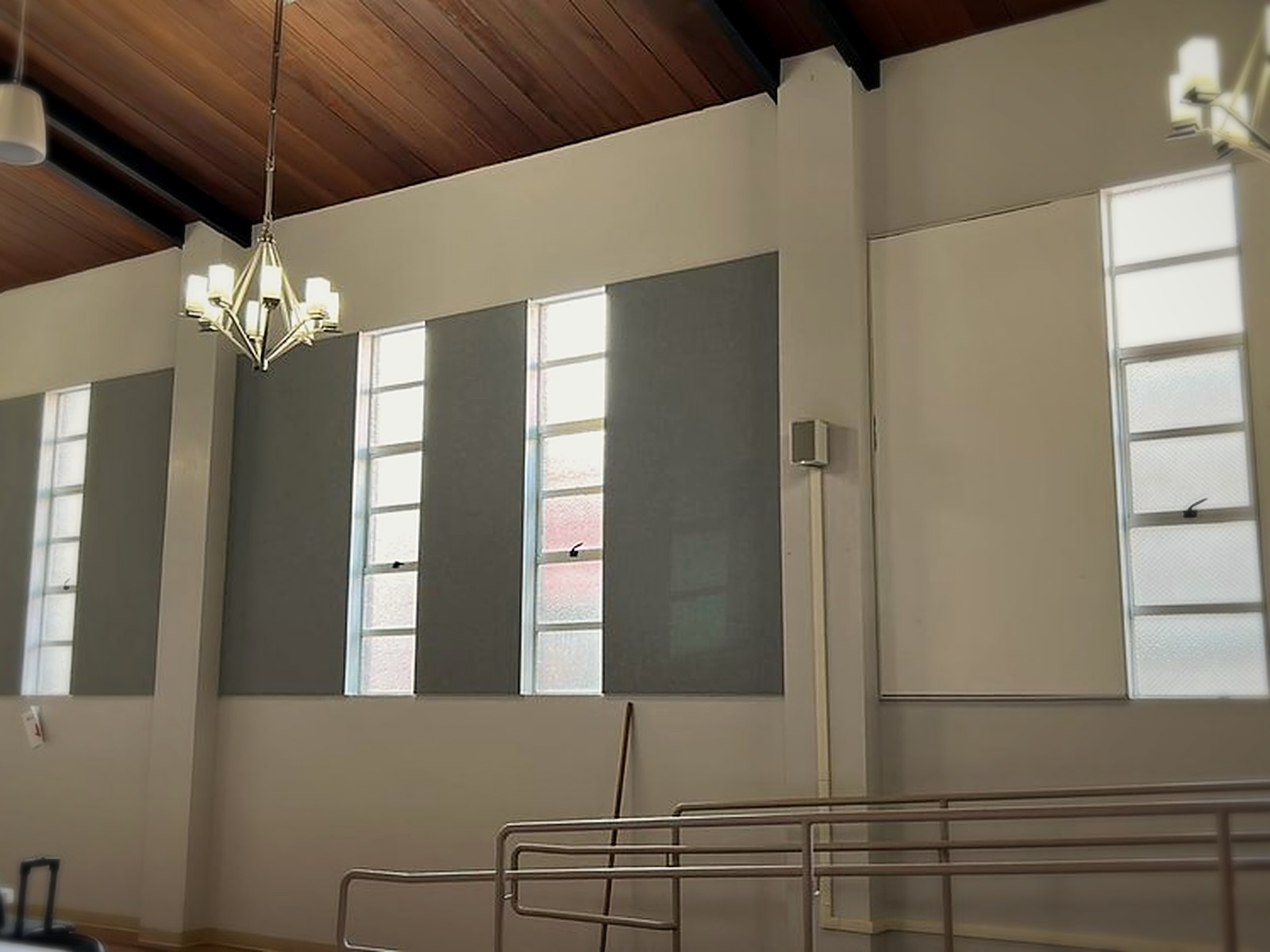
The long wall nearing completion. 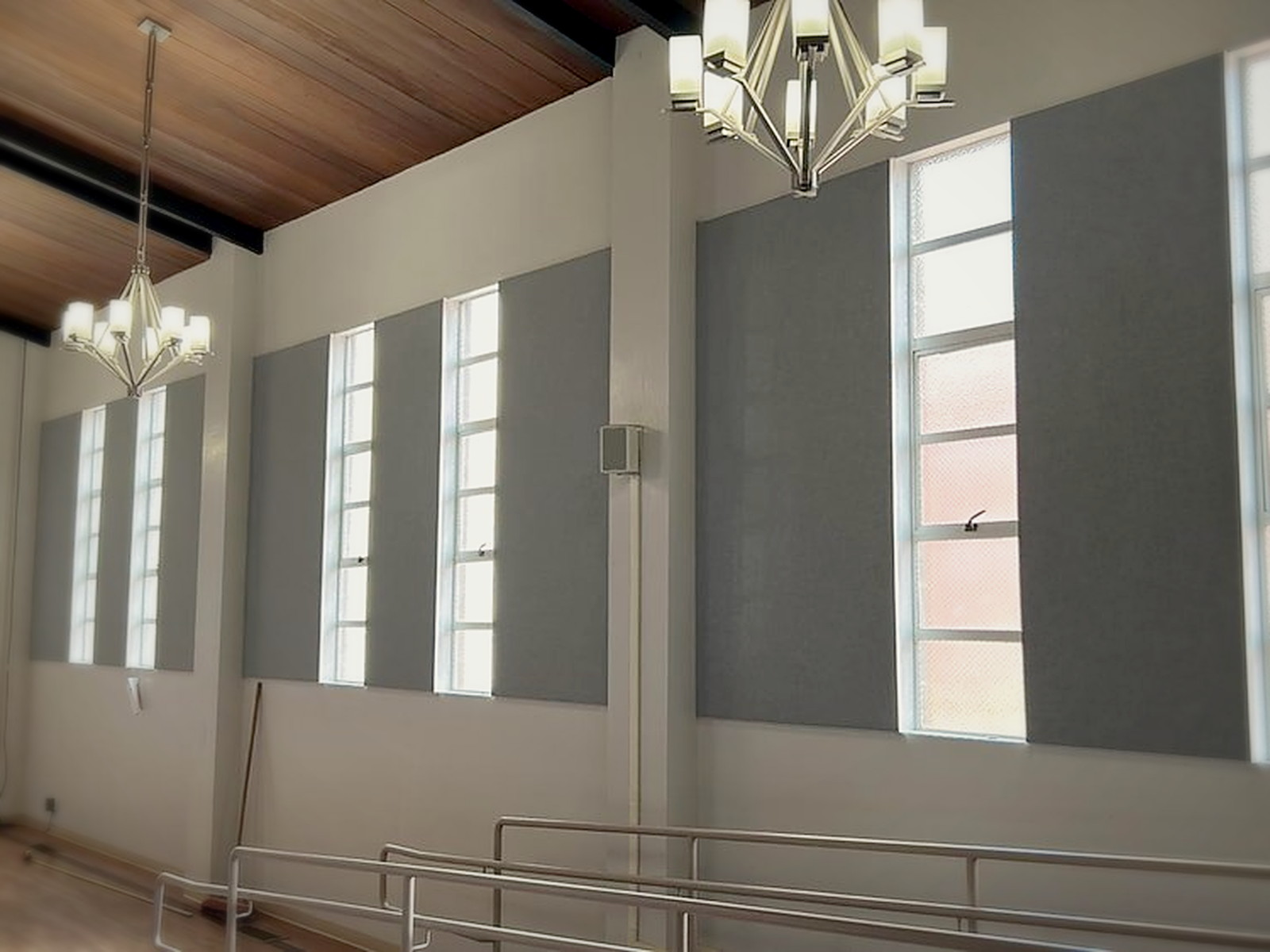
Panel field reading as part of the architecture rather than as add-on treatment. 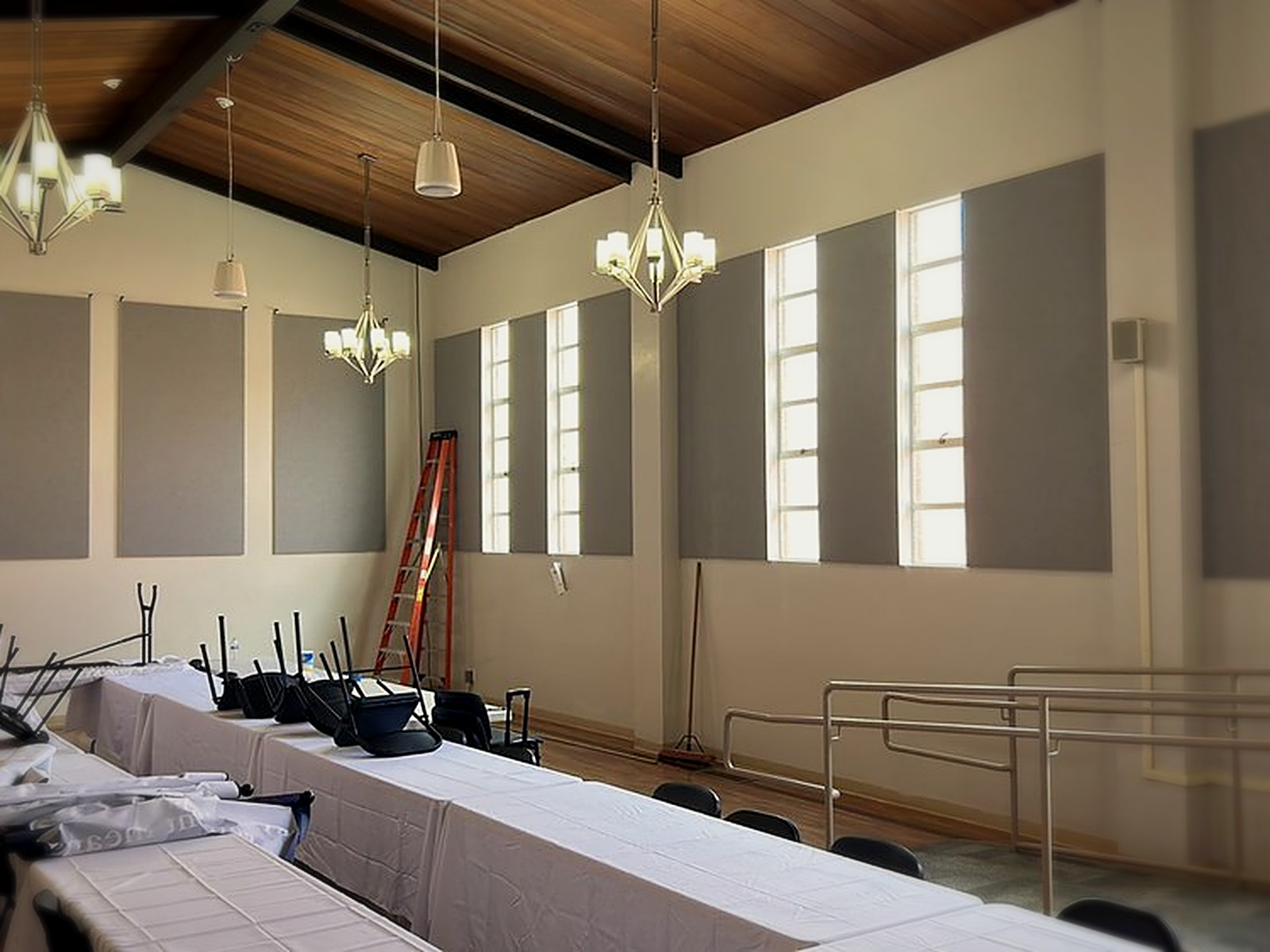
All thirteen panels finished, fabric tucked and seams closed. 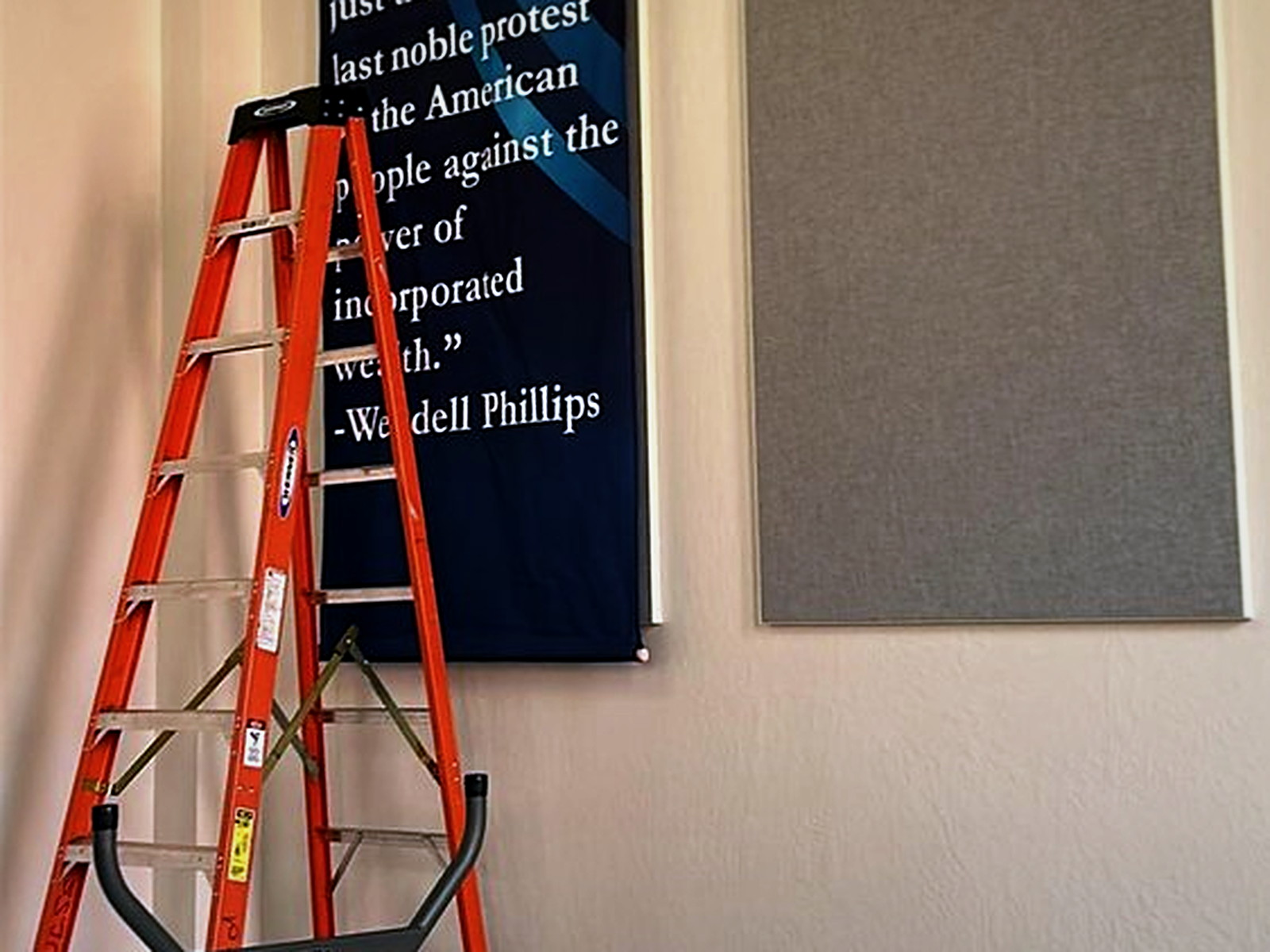
Rehanging the banners over the panels — absorption is unaffected. The room's identity back on the wall, with the acoustics fixed behind it.
Build timeline
- 1
Room assessment and panel layout
A large meeting room with a vaulted wood ceiling, hard plaster walls and long tables had very little sound-absorbing material, so reverb time ran long and speech intelligibility suffered. We laid out nine large panels on the main wall and four on the side wall for maximum absorption, marking positions on the wall before anything was mounted.
- 2
Track frames and polyboard
Custom fabric track frames were mounted to the wall and polyboard absorption was set inside each frame — the layer that actually does the acoustic work behind the finished fabric face.
- 3
Fabric stretch and tuck
Fabric was cut to each panel and tucked into the track jaws, giving a flat, tensioned face with no visible fixings. Panels were placed between the windows so the treatment reads as architecture and the daylight is untouched.
- 4
Sizing to the existing wall hangings
The side-wall panels were built to the same footprint as the institution's existing banners, so the hangings could go straight back up in their original positions rather than being relocated or removed.
- 5
Fixtures rehung
All banners were rehung on their rods directly over the finished panels. Hanging a fabric banner in front of a fabric-faced absorber does not block absorption, so the room keeps both its acoustics and its identity.
Materials & system summary
The key soundproofing components used on this build, grouped by the job each layer does in the assembly.
Absorption
- Polyboard acoustic infill
Set inside each track frame as the absorptive core that converts reflected energy and shortens reverb time across the room.
Panel system
Site-built track frames with fabric cut and tucked in place, sized panel by panel to the wall bays and to the existing banners.
Finish
- Acoustically transparent panel fabric
Grey stretched fabric face that lets sound pass into the polyboard while giving the walls a clean, uniform finish.
What was the sound concern?
This Oakland institution runs meetings, trainings and gatherings in one large room, and the room was fighting them. A vaulted wood ceiling, hard plaster walls and tall glazing gave sound nowhere to go, so reverb time ran long and the space sounded louder than it actually was. Long reverb is not just uncomfortable — it degrades speech intelligibility, and in a room built for people to talk to each other that is the whole problem.
What was our plan?
Absorption on the walls, at scale. We specified nine large custom fabric track panels on the main wall and four on the side wall — enough surface area to bring the decay down meaningfully rather than token treatment. Track frames with polyboard inside and a stretched fabric face let us size every panel to its own wall bay, including panels matched to the footprint of the banners already hanging in the room.
What further issues did we need to resolve?
The room had a lot of existing conditions to respect: tall windows breaking up every wall, a sloped ceiling line, light fixtures and a wall-mounted speaker, and the institution's banners, which are part of how the space presents itself. Panels had to fit between the windows for the best aesthetics, follow the ceiling geometry, and — critically — allow every banner to be rehung exactly where it was.
What was our final Sound Solution?
Thirteen fabric track panels now run the length of both treated walls, polyboard behind an acoustically transparent grey face, tucked flat with no visible hardware. The banners went straight back over the top of them, which does not affect sound absorption at all. The room reads the same as it always did, and it finally sounds like a place where people can hear each other speak.
Want a room like this?
Tell us the size of your space, where it is, and whether you're trying to block sound or clean up the sound inside it. We'll come back with a scoped estimate — usually within one business day.
Prefer to talk it through? Call (415) 864-4440.